What I’ve learned from 3 years of sobriety
My journey of recovery began around the time of my 40th birthday, more than three years ago, when my therapist suggested that I had codependent tendencies. I about jumped out of my skin. I was mortified. I was so mortified by this, that while I had been journaling almost every day at the time, it took me weeks to write about it and mention it to anyone else. However, it would eventually set me free.
Why was it that I was so mortified? What was it that I feared? It was shame. I remember a few months afterward, a therapist friend of mine effectively asked me what it would feel like in relationship to others to let go of my perfectionism, people pleasing, and codependency, and let myself be seen as an imperfect, messy, unkempt version of myself. I squirmed at the question because deep down I knew I’d never been able to let myself do that. This is evidenced by how I’d always talked about growth, change, and healing in retrospect and never in present terms. I couldn’t just say, “I’m struggling and need some help.”
What shifted for me then is in part what inspired me to return to school to get a master’s degree in positive psychology. I grew up in an environment of inadequacy and scarcity in which I was never enough. For most of my life, that inner voice—the inner critic—was the voice and words of that early childhood caregiver who I could never live up to. I talked to myself like they’d talked to me (and like their parent talked to them), especially when I felt like I’d made a mistake, fallen short, or disappointed others. My rapid reaction was always one of criticism.
Being cut off from our own natural self-compassion is one of the greatest impairments we can suffer. Along with our ability to feel our own pain go our best hopes for healing, dignity and love. What seems nonadapative and self-harming in the present was, at some point in our lives, an adaptation to help us endure what we then had to go through. If people are addicted to self-soothing behaviours, it's only because in their formative years they did not receive the soothing they needed. Such understanding helps delete toxic self-judgment on the past and supports responsibility for the now. Hence the need for compassionate self-inquiry. — Gabor Maté, In the Realm of Hungry Ghosts: Close Encounters with Addiction
We often talk about recovery as if it’s recovery from a specific behavior—drinking, drugs, sex, gambling, and so on. And yes, there was that. My first therapist told me that I binged travel like others binge TV, alcohol, and food. But it wasn’t so much what I had to recover from, as it was who I had to recover. I had to go recover that little kid who, for his entire life, especially from men, was told that he wasn’t good enough, wasn’t man enough, wasn’t smart enough, wasn’t athletic enough, wasn’t skilled enough—just wasn’t enough. What I was or wasn’t didn’t matter; at some point, that became my belief system and the way that I saw myself and the way I navigated through the world.
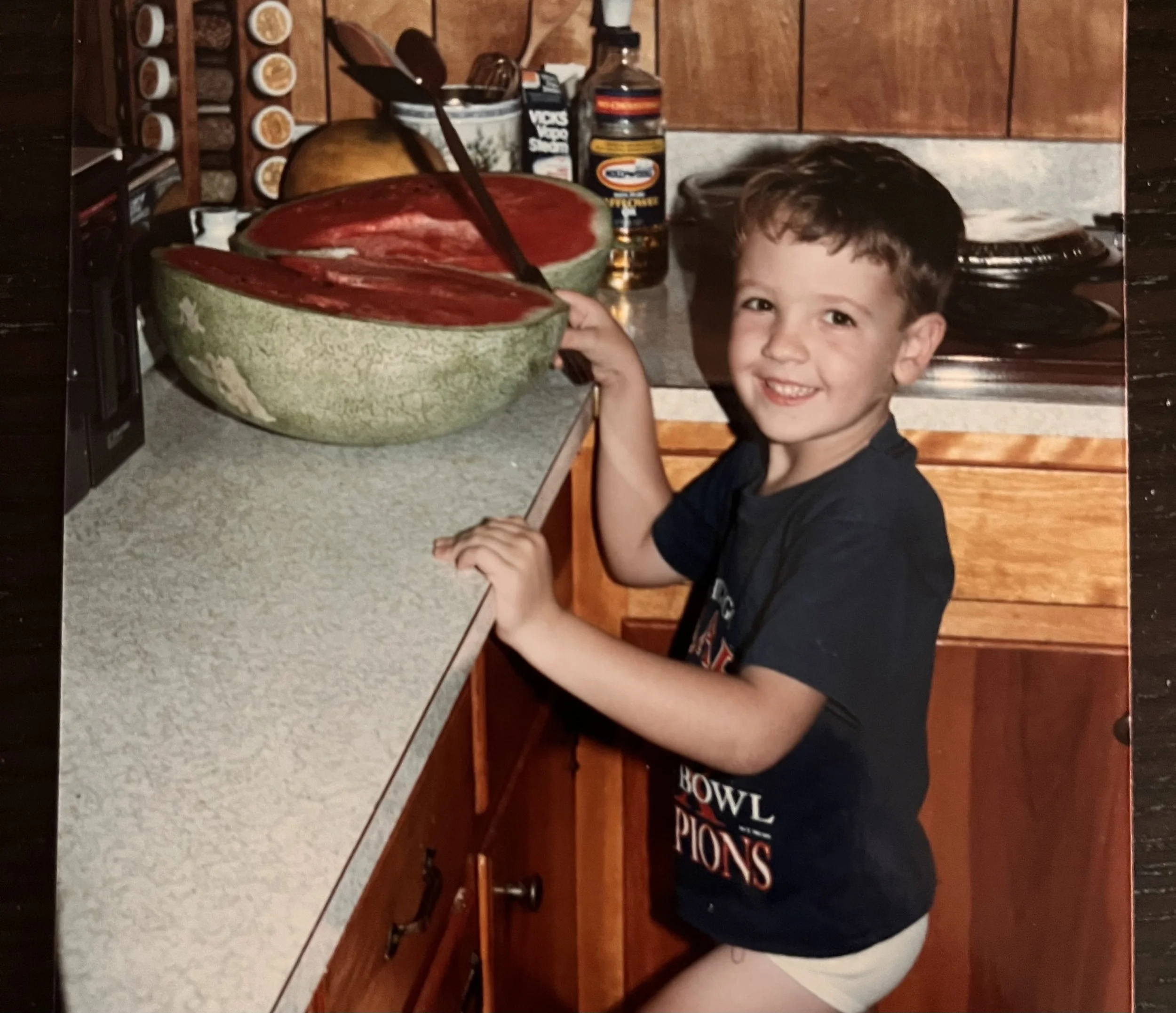
The journey of recovery then was a search and rescue mission. It was to recover that little kid—that young, impressionable version of myself—who’d felt stranded, abandoned, and rejected and who men didn’t model worth and belonging to. I gave him permission to be his most authentic self and let him know that being enough, worthy, valued, and a man isn’t something that he does or has to earn, but it’s something that he is.
“Stop walking through the world looking for confirmation that you don’t belong. You will always find it because you’ve made that your mission. Stop scouring people’s faces for evidence that you’re not enough. You will always find it because you’ve made that your goal. True belonging and self-worth are not goods; we don’t negotiate their value with the world. The truth about who we are lives in our hearts. Our call to courage is to protect our wild heart against constant evaluation, especially our own. No one belongs here more than you.” ― Brené Brown, Braving the Wilderness: The Quest for True Belonging and the Courage to Stand Alone
Because the reality was that what was modeled to me early on and continued throughout my childhood and adolescence was that meaning, connection, fulfillment, and worth had to come outside of myself. It in part, was a byproduct of the Southern Baptist culture I grew up in, but was also what was modeled to me from caregivers and most people around me. While there wasn’t one thing, like alcohol, that I was addicted to, I gave away my power and parts of myself to so many different things—travel, work, social media, booze, food, codependent relationships, porn, and more.
Yet those different periods of life, coping mechanisms, and ways of existing were no more a mistake than taking a wrong turn, having to fix a flat tire, or taking a detour on a road trip. It’s information, it’s experience, it’s education, it’s life, it’s being a human. "Embrace your grief," Carl Jung said. "For there, your soul will grow.” Perhaps that’s why it’s called recovery and not recovered. The journey forward continues. And even those moments of grief I see as steps forward and not backward.
Societally, we have a very complicated relationship with addiction. We treat addiction and those who have addictions as an enemy that must be vanquished. This is evidenced by the “war on drugs” and how we punish those with addictions. The majority of the prison population, for example, has an active substance abuse or is in prison for something substance-related. Admitting addiction then is like our own scarlet letter.
Gabor Maté, however, in his fantastic book, In the Realm of Hungry Ghosts, challenges how we think about addiction, posing the question, “Why do we despise, ostracize and punish the drug addict, when as a social collective, we share the same blindness and engage in the same rationalizations?” Maté, a retired physician and renowned addiction expert, defines addiction like this: “Any behavior that a person craves, finds temporary relief or pleasure in but suffers negative consequences as a result of, and yet has difficulty giving up.” Swiss psychologist Alice Miller, when answering the question of what addiction really is, stated, “It is a sign, a signal, a symptom of distress. It is a language that tells us about a plight that must be understood.”
If this is what addiction is, then are we not all addicts? And if addiction is a byproduct of distress, and not a byproduct of who we are or a substance, then should we not meet it with curiosity and empathy? I believe that admitting our addictions, and admitting it in front of others to witness, isn’t something that imprisons, but rather has the power to set us free. Because when we think of addictions as behaviors that have resulted from stressors and our environment, then I think there’s some needed grace and empathy that we can bring to ourselves and our relationships.
This brings me to Laura McKowen’s writing on addiction, which I can’t recommend enough. McKowen wrote We Are The Luckiest and Push Off From Here, which highlights her 9 essential truths for the sober community. Among the 9 truths: This is your thing, this isn’t your fault, it is your responsibility, and it is unfair that this is your thing. I believe there is great power in all of this. Society would have us think that addiction exists because of either the substance, the person abusing the substance, or a combination of the two. And if we just get rid of the substance (war on drugs) and abuser (send them to prison, rehab, or the streets), then addiction will disappear. But to quote Gabor Maté again, “Drugs, in short, do not make anyone into an addict, any more than food makes a person into a compulsive eater.” The problem isn’t you or me or whatever the thing is. If you want to hold someone accountable, then hold accountable the society and oppressive systems that feed and perpetuate addiction and shame anyone who deviates from their norms of appropriate behavior and vices. Therefore, let’s challenge these systems and call bull shit, while also owning our shit and taking responsibility for it.
This is why I’m so adamant about community and people having access to spaces to challenge societal norms, share their unique struggles, and be witnessed by others who have similar struggles. And I believe it’s all the more important for men and those who struggle with addiction. The numbers vary, but there’s a lot of research over the years that’s found that about 90% of people with substance abuse addictions don’t get help. Men in particular are hesitant to ask for help. I’ve previously shared the Priory Group study of 1,000 UK men that found that 40% of men had never spoken to anyone about their mental health and 40% of the polled men said that it would take thoughts of self-harm for them to consider help. Nearly 30% of the men in that study said they were “too embarrassed” to talk about it. Other studies show that while 1 in 10 men experience anxiety or depression, less than half seek treatment.
Yet research expresses the immense power of community. Some studies have found that as much as 50%-70% of those who attend AA meetings were abstinent at one year. Other studies have demonstrated incredible impacts of peer support groups. A 2011 meta-analysis (Pfeiffer et al.), assessing the efficacy of peer support interventions for reducing depression, found that they improved depression more than usual care, and had similar efficacy to group cognitive behavioral therapy. And multiple studies have found that men’s sheds—popularized in Australia as a way for older men to bond over shared activities—provide a number of social and emotional benefits for attendees.
My hope is that culturally, we, and particularly men, will increasingly find those spaces—whether it’s Fellas Night In First Tuesday meetups, AA, or other communities—where they can speak openly and vulnerably about their struggles and be met with openness, curiosity, and love.
I’ll end with this quote from Laura McKowen's We Are the Luckiest:
“One stranger who understands your experience exactly will do for you what hundreds of close friends and family who don't understand cannot. It is the necessary palliative for the pain or stretching into change. It is the cool glass of water in hell.”