A great TV dad is more than just a character
“Who is your all-time favorite TV dad?” This is the question I posed at our first Seattle men’s meetup. I admit it’s a product of my own childhood, one that was often marked by the physical and emotional absence of male caregivers I thought I could count on. So what felt absent in my home life I looked for elsewhere. As a kid I would sit on our living room carpet as close to the TV as possible, hanging on every word Mr. Rogers said. Later on I traded Mr. Rogers for TGIF dads Carl Winslow and Danny Tanner. It was only fitting then to go back recently to rewatch the 1989 pilot of Family Matters. And let me tell you, “Tearing up to Family Matters” was NOT on my 2026 BINGO Card.
In the pilot, Carl’s wife, Harriette, has invited his mom to live with them. The excitement of her arrival quickly wears off, as resentment and codependent patterns emerge and tensions build. Harriette and Carl, however, have a frank, yet vulnerable, open conversation about Carl’s resentments. Reluctant at first, Carl decides to have a hard convo with his mom after taking a walk to think about it. What results is an altogether connecting, sweet, empathetic moment. Boundaries are drawn, love is expressed, and the show ends with the entire family singing around the piano.
In 5 minutes of a fictional sitcom I witnessed what I rarely saw, but very much craved, from men when I was young: Empathy, responsibility, accountability, forgiveness, connection, and boundaries. That’s not to take away from the trips, basketball practice drop-offs, and basic needs being met. Unfortunately, that wasn’t what my childhood memories and relationship with male caregivers was marked by. Rather, it was marked by the verbal and emotional abuse, threats, neglect, and negative memories, like sitting by myself as a kid in the barbershop while they went in the back to look at adult magazines.
What I didn’t find in some of my most important relationships, I then started finding with the likes of Carl Winslow, Danny Tanner, and others. And I’m not the only one. Studies have found that for some, parasocial relationships, i.e. TV dads, are like social surrogates (aka Social Surrogacy Hypothesis), providing a low-risk sense of connection. For those who’ve experienced disconnection and trauma, especially in childhood, that need for social support is even greater.
However, research suggests that the impact of TV shows is greatest when adults are reinforcing positive behaviors and patterns that young people watch on TV. There have been a number of studies that have looked at the impact of Daniel Tiger’s Neighborhood, which was inspired by Mister Rogers’ Neighborhood. In one study, teens who’d watched the show years earlier reflected on the positive impact it had both in that moment in time and in the years that followed. As this report about the study continues:
“The study revealed that teenagers who watched Daniel Tiger's Neighborhood as young children retained significant memories of the show's lessons about social-emotional and life skills. Nearly three quarters of the participants remembered learning how to understand others' emotions, maintain friendships, manage their emotions, and develop problem-solving skills.”
Another study explored the impact of Daniel Tiger’s Neighborhood on pre-schoolers. The researchers found that those preschoolers who came from homes where parents talked frequently with the children about the episodes showed greater empathy, emotional awareness, and self-efficacy. Researchers also found that those children with more familiarity with the show’s characters had better socio-emotional skills. As co-author Malinda Colwell said:
“One explanation is that children may have more familiarity with the characters because they relate to them well and they like them and therefore learn more from them because they pay close attention,” she said. “Young children are clearly influenced by those characters (and people) they relate to and want to be like.”
TV characters ultimately can’t be a replacement for dads, moms, and other important people in one’s life. But for many children and adolescents, there has to be someone to fill in the gaps. Because as the latest U.S. Census found, 1-in-4 U.S. children live without a father in the home (much higher for people of color). Trauma exposure is even higher in children. This 2024 study leads with a stat that “More than 2 out of 3 children and adolescents in the United States experience trauma by the age of 16 years.” What often follows are greater rates of negative outcomes and mental health challenges.
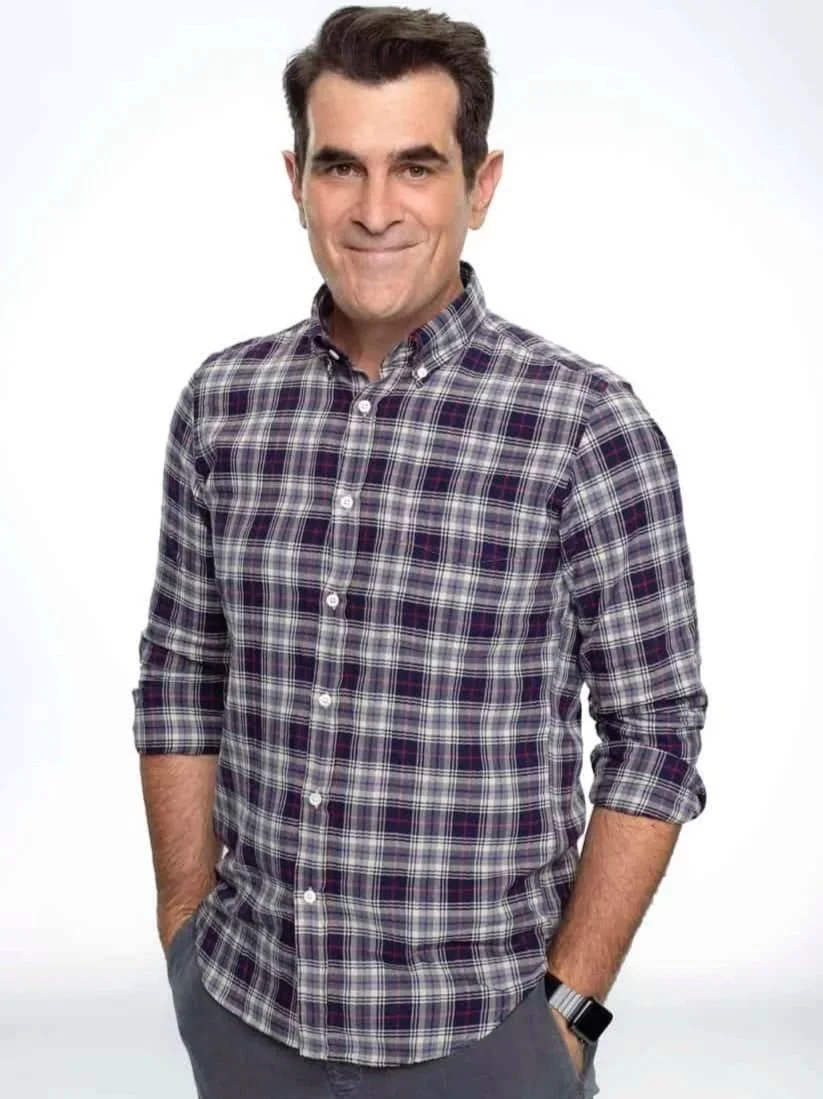
Phil Dunphy was among the TV dads mentioned at our meet-up last month when I asked the group who their favorite TV dad was. ©ABC
I’m not making a case for us to watch more TV. Unfortunately, a lot of the good examples that we could learn from on TV, like good TV dads, have dwindled significantly. TV dads have become increasingly inept. However, this all reinforces just how important social connection and the quality of our relationships are. Because as the longest study (the Harvard Study of Adult Development) on well-being found, the greatest predictor of long-term well-being and happiness is the quality of one’s relationships. Social support and connection, in an age of disconnection and pervasive loneliness, is one of the single healthiest things that we could do to increase our quality of life and lower our risk of premature death. You don’t have to find it at Fellas Night In, but I hope that in a world that’s increasingly divided and disconnected, you’ll find your own spaces to feel connection, community, and belonging.