The single book on masculinity that I recommend more than any other
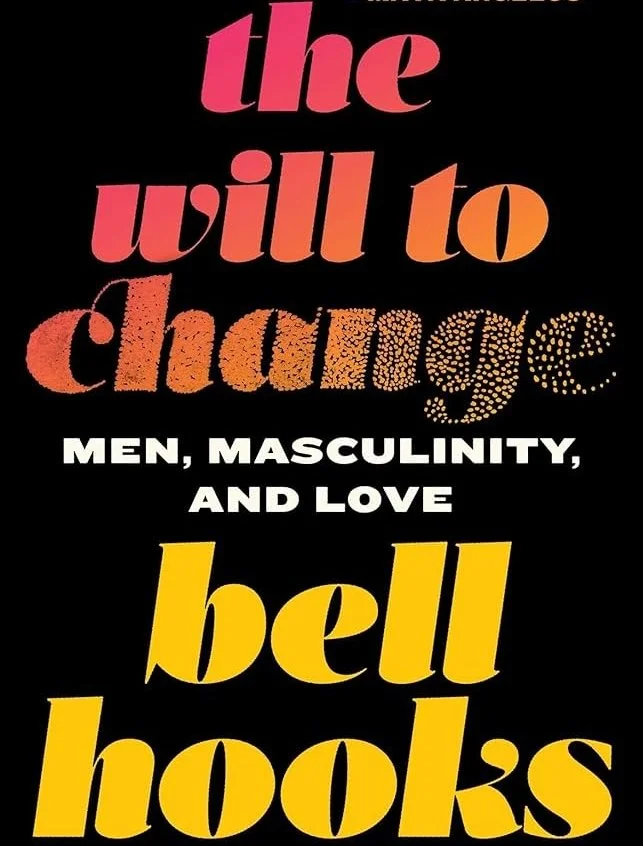
There’s no book on masculinity—and perhaps no book, period—that I’ve recommended more than The Will to Change by bell hooks. There are many reasons I recommend it, but the biggest is this: hooks does what many modern conversations on masculinity fail to do: Calls patriarchy the destructive system it is (calling it imperialist white-supremacist capitalist patriarchy) and names the ways that both men and women benefit from it, are harmed by it, and perpetuate it. Most importantly, she provides a road map for healing.
“Learning to wear a mask (that word already embedded in the term “masculinity”) is the first lesson in patriarchal masculinity that a boy learns. He learns that his core feelings cannot be expressed if they do not conform to the acceptable behaviors sexism defines as male. Asked to give up the true self in order to realize the patriarchal ideal, boys learn self-betrayal early and are rewarded for these acts of soul murder.” ― bell hooks, The Will to Change: Men, Masculinity, and Love
Frankly, talking about masculinity without addressing patriarchy is like patching cracks in the wall while the foundation is sinking. As hooks writes, “The crisis facing men is not the crisis of masculinity, it is the crisis of patriarchal masculinity.” And the harmful effects of patriarchy for men is reflected in some of the research. The Pan American Health Organization (PAHO) found that 1 out of 5 men die before 50 in the Americas because of “socially constructed ‘macho’ behaviors”. As hooks goes on to say, “Patriarchy demands of men that they become and remain emotional cripples.” In doing so, we “deny men their full humanity.”
This is personal for me. For most of my adult life I wanted to be good—good enough for love, a good friend, a good brother, a good boyfriend, and just a good person. Yet below the surface, there was resentment, pain, anxiety, overwhelm, and that self-betrayal that hooks mentions. Most of my feelings, as hooks describes, I’d learned through socialization to suppress. And I numbed through work, travel, alcohol, porn, and other escapes. Note: I wrote about my own recovery journey in more detail in my essay here.
It wasn’t until I began to acknowledge patriarchy—and other systems I had benefited from, perpetuated, and been harmed by—that I truly began to feel healing, wholeness, alive, and connection, both to myself and others. I was finally able to invite in those emotions that I’d long buried. That confrontation with patriarchy was the doorway to setting myself free. In The Will to Change hooks writes the following, playing off the words of renowned therapist Olga Silverstein, about liberated men:
“What the world needs now is liberated men who have the qualities Silverstein cites, men who are 'empathetic and strong, autonomous and connected, responsible to self, to family and friends, to society, and capable of understanding how those responsibilities are, ultimately, inseparable.”
We need more safe, judgment-free spaces where men can speak their pain. This is in part why I started Fellas Night In; if you’re in Seattle, RSVP for one of our upcoming events. As hooks reminds us, “To heal, men must learn to feel again. They must learn to break the silence, to speak the pain.” I believe that is real strength, and dare I say men’s superpower: To say the hard things out loud, even when it’s met with skepticism, judgment, or discomfort from others. Because in doing so we’re true and authentic to ourselves.