Why I started Fellas Night In
You likely already know that the data on men’s mental health is bleak. A PBS NewsHour story reported that just 21% of U.S. men say that they receive emotional support from friends every week, which is compared to 41% for women. Men make up 50% of the population but account for nearly 80% of suicides, according to the CDC. National data in this release found that men die of overdose at a 2-3 times greater rate than women. And the Pan American Health Organization (PAHO) found that 1 out of 5 men die before 50 in the Americas because of "socially constructed 'macho' behaviors".
This data about men’s mental health is a tough pill to swallow. And it doesn’t get any better when you consider the far-reaching impacts that men and men’s mental health has on others. The perpetrators of violence are overwhelmingly male—as in 9 out of 10. Men currently make up 93% of inmates in America. And 98% of mass shooters are male, according to The Violence Project. Statistics like these make it easy to believe that it’s both unhealthy to be a man and dangerous to be around men. But that’s only part of the story.
This all is very personal for me. My story, however, really started long before I was born. In the late-1800s, my great great grandfather, his wife, and three kids (including my great grandfather), came over to America from Germany. The decades that followed would see my great grandfather’s life be marked by violence and abuse. Simply put, violence and abuse doesn’t happen in a vacuum. I don’t know what happened or the events that led to it. I just know that his abusive acts would leave an indelible mark on our family.
That abuse continued to roll down for generations. Recent years have seen the development of tools that measure the severity of adverse experiences from one’s childhood. One such measurement tool, the Adverse Childhood Experiences (ACES) questionnaire was developed in the 1990s to measure the trauma of a person’s childhood. One study found that the higher the ACEs number, the higher the chance of heart disease, depression, PTSD, substance abuse, obesity, and other problems. According to the American Journal of Preventative Medicine, “Children who experience four or more ACEs are 7.4x as likely to suffer from alcoholism and 12.2x as likely to attempt suicide.” My score is in the range of 4-5.
This means that my likelihood of heart disease, cancer, liver disease, and many other health risks are increased several fold compared to someone who had no adverse childhood experiences. In other words, the difficult experiences of my childhood, which I had no control over, skyrockets my health risks and likelihood of repeating abuse. Because what doesn’t get repaired, gets repeated. My family, anecdotally, is evidence of this.
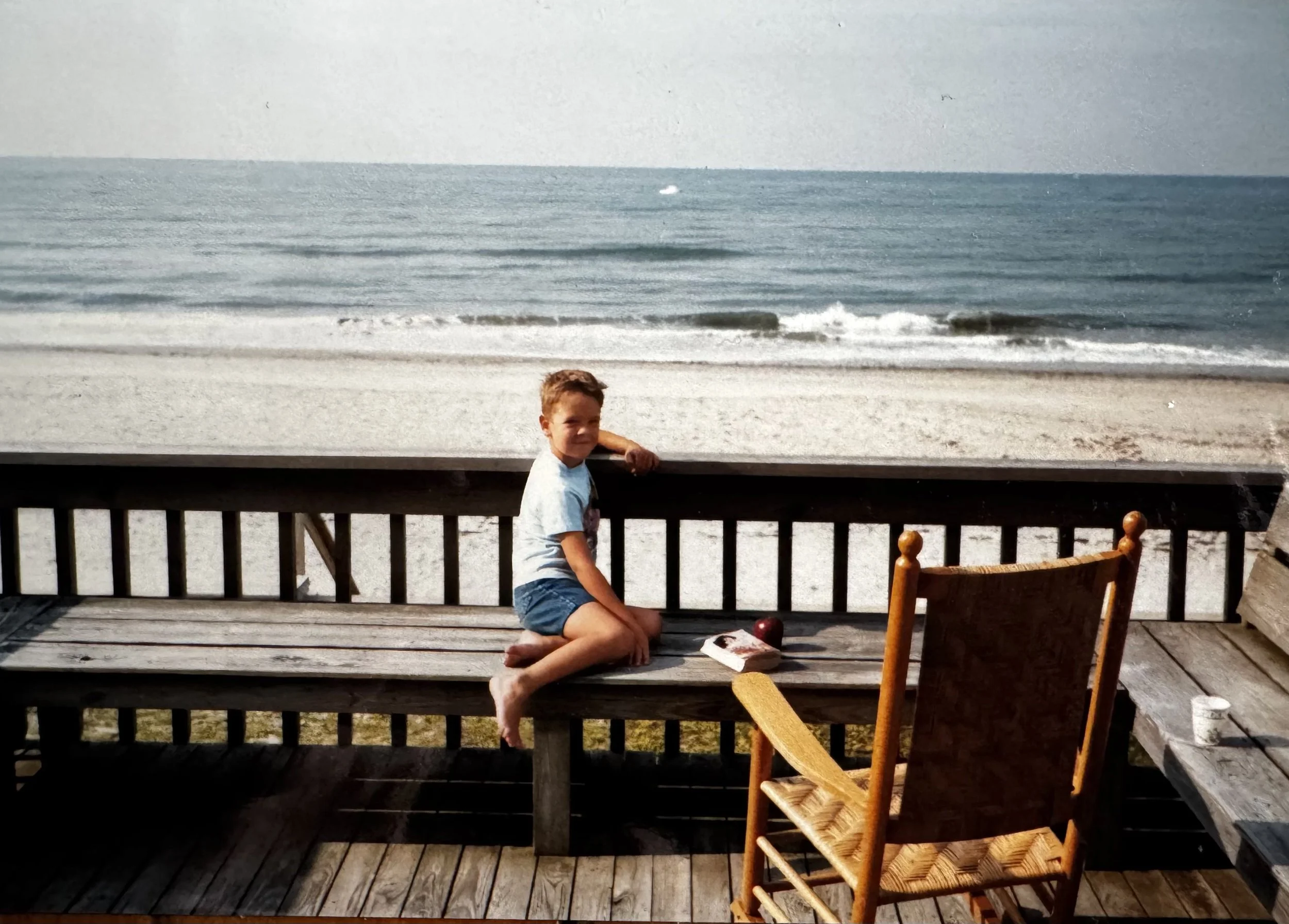
I keep a number of photos like this in my journal. They are a reminder both of where I’ve come from and the young kid who’s still inside.
In my mid-30s I started to come face-to-face with all this. On paper, I had what at the time seemed like this big, exciting, fun life. However, it was impossible for me to be in intimate relationships. After a few months of dating I would inevitably get skittish, start withdrawing, or find a reason why we shouldn’t be together. I effectively gave them the Heisman. When my most significant relationship to date indicated this and showed me how I’d spent my entire life running from my childhood and my family’s past, I decided that something had to change.
I walked into my first therapist’s office a few weeks later. I told her not to take in easy on me since I’d formerly been a therapist assistant, knew the therapy lingo, and was there of my own accord. I immediately regretted saying that. She did not take it easy on me. But the decision to go to therapy and start on a journey of self-discovery was the single best decision of my life.
I’ve written and told this story so many times, and no matter how many times I do, it never ceases to overwhelm me with gratitude and fill me with emotions. I just feel so fortunate, privileged, and like I hit the mega millions jackpot, especially when it comes to my mental health journey. My resolute determination to not repeat the actions of the men who came before me ultimately led me to no-BS therapists who would challenge me in ways that I’d never been challenged before and who helped activate those sleeping parts of me that needed to be awakened.
I think deep down, for most of my childhood, adolescence, and early adult life, I felt gaslighted, manipulated, and walked all over. And I was told, whether indirectly or directly, that I wasn’t good enough. So once I started to pull back the curtain on generational trauma, my emotional inheritance, and my adverse childhood, and saw how patriarchy and other harmful systems underlied it all, I became more determined than ever. This basically summed up my reaction when I started pulling back the curtain on it all:

The seven years that have followed have been a complete excavation. At my core, I’m still who I’ve always been. I’m still as wide-eyed, curious, adventurous, and completely enthralled with the world as I’ve ever been. I still take entirely too many photos of every single place I go, and every food that I eat. I’m still not above having s’mores for dinner. I still geek out on Star Wars, Mad Max, Tron, and Marvel movies. And yes, I do in fact, still go to the arcade. The transformation wasn’t so much the things I do, what I believe in, or how I spend my time—the transformation was what underlies the things I do, what I believe in, and how I spend my time. And it transformed who I am and how I show up in relationships.
I love how I heard author and licensed therapist Lair Torrent once talk on Instagram about the work of therapy and mental health. He said that we often think of it like going to see a doctor. But that’s not how it works. The rubber meets the road in those moments “when everything inside of us is telling us to do what we’ve always done,” Lair says. As he continues, “But then we do the thing we’ve been working on in session.” That is the payoff. That’s when you jump out of your seat and high five yourself.
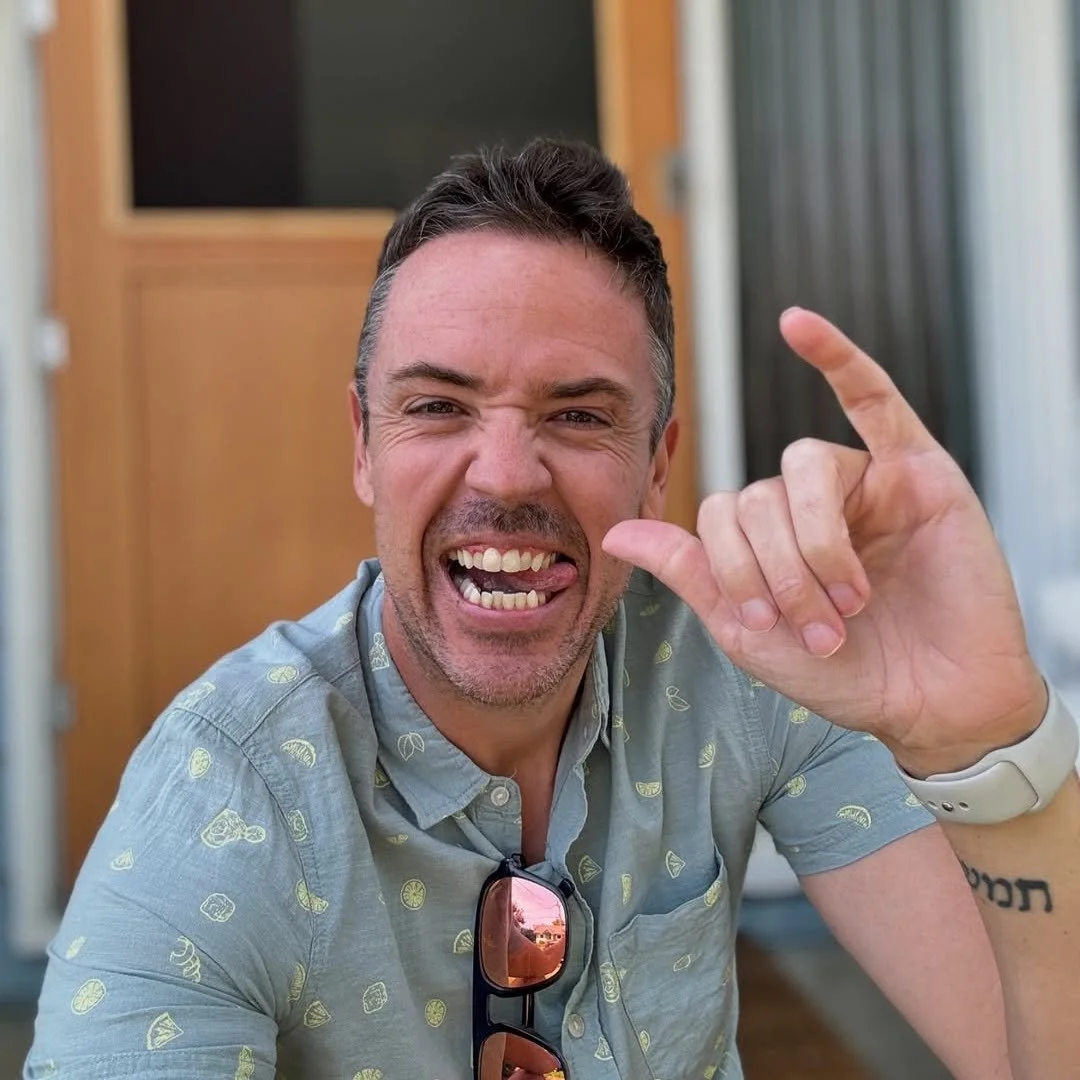
Listen, no degree, certification, or years of therapy makes me any more healed than anyone else. That’s not why I started Fellas Night In. I started it because I wanted to create the kind of space and community I wished I’d had years ago. I believe that men—and men’s mental health—are at an inflection point. The data tells us what many of us already feel: Men’s mental health is worsening and even reaching epidemic levels in some areas. I don’t have all the answers, but I do believe community and connection are the way forward. I hope you’ll come along on this journey — together.