In celebration of 30 months of sobriety
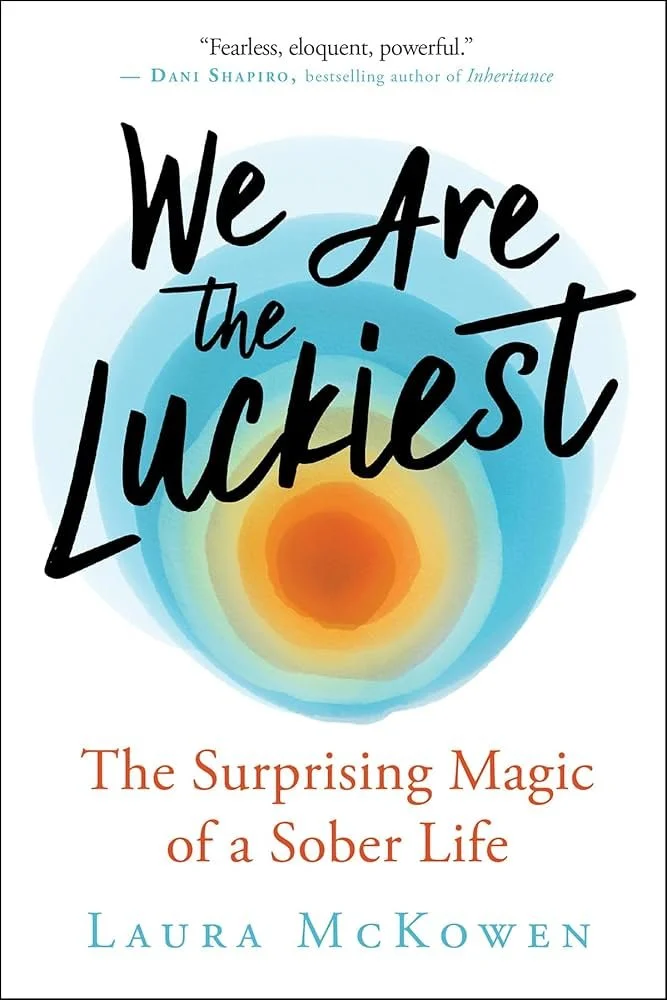
We all have a thing—and that thing is your thing and only your thing. This is how chapter 1 of Laura McKowen’s fantastic book, We Are the Luckiest, begins. This seemed like the perfect jumping off point when I was thinking about how I wanted to start this essay. Because I believe that how McKowen talks about addiction, and how I think about it myself, flips the typical narrative on its head. After a paragraph mentioning more traditional types of addictions, she writes the following:
Maybe — maybe your thing is less severe or more socially acceptable, like staying at the office past your kids' bedtime most nights because work is the only place you feel in control, or maybe you wrestle with crippling perfectionism. Maybe it's the red-hot hatred you feel toward every woman pushing a stroller since you discovered you couldn't get pregnant last spring, or maybe you keep trying to untangle the knot of rage in your chest that just never leaves. I don't know what your thing is, but alcohol was mine. — Laura McKowen, We Are the Luckiest
Here’s my hot take: We are all addicts. Wait, don’t go yet! Hear me out here. I believe that the sooner that we can admit that we’re all addicts, the sooner we’ll take back the power we’re giving our addictions and the sooner we’ll heal. In turn, the stigma around addiction will lessen and more people will get the help and healing they need. But first, I think we need to look at the science, and think about addiction differently than traditional definitions of it.
And oh is there stigma. The numbers vary, but there’s a lot of research over the years that has expressed that about 90% of people with substance abuse addictions don’t get help. This is particularly the case for men. I’ve previously shared the Priory Group study of 1,000 UK men that found that 40% of men had never spoken to anyone about their mental health and 40% of the polled men said that it would take thoughts of self-harm for them to considering help. Nearly 30% of the men in that study said they were “too embarrassed” to talk about it. Other studies show that while 1 in 10 men experience anxiety or depression, less than half seek treatment.
“Men's willingness to downplay weakness and pain is so great that it has been named as a factor in their shorter life span. The ten years of difference in longevity between men and women turns out to have little to do with genes. Men wait longer to acknowledge that they are sick, take longer to get help, and once they get treatment do not comply with it as well as women do.” ― Terry Real, I Don't Want to Talk About It: Overcoming the Secret Legacy of Male Depression
For me it took three decades until I went to therapy and then several years for me to see the results and undo the impacts of patriarchy and the harmful, abusive systems I grew up within. And let me be clear. There’s a straight line between oppressive systems like patriarchy and addiction. I think of myself as a lucky one to have asked for help when I did. I never abused drugs, alcohol, or other things in a traditional sense, though I was most definitely primed for it. My Adverse Childhood Experiences (ACEs) score is about a 4-5. “Children who experience four or more ACEs are 7.4x as likely to suffer from alcoholism and 12.2x as likely to attempt suicide,” according to the American Journal of Preventative Medicine.
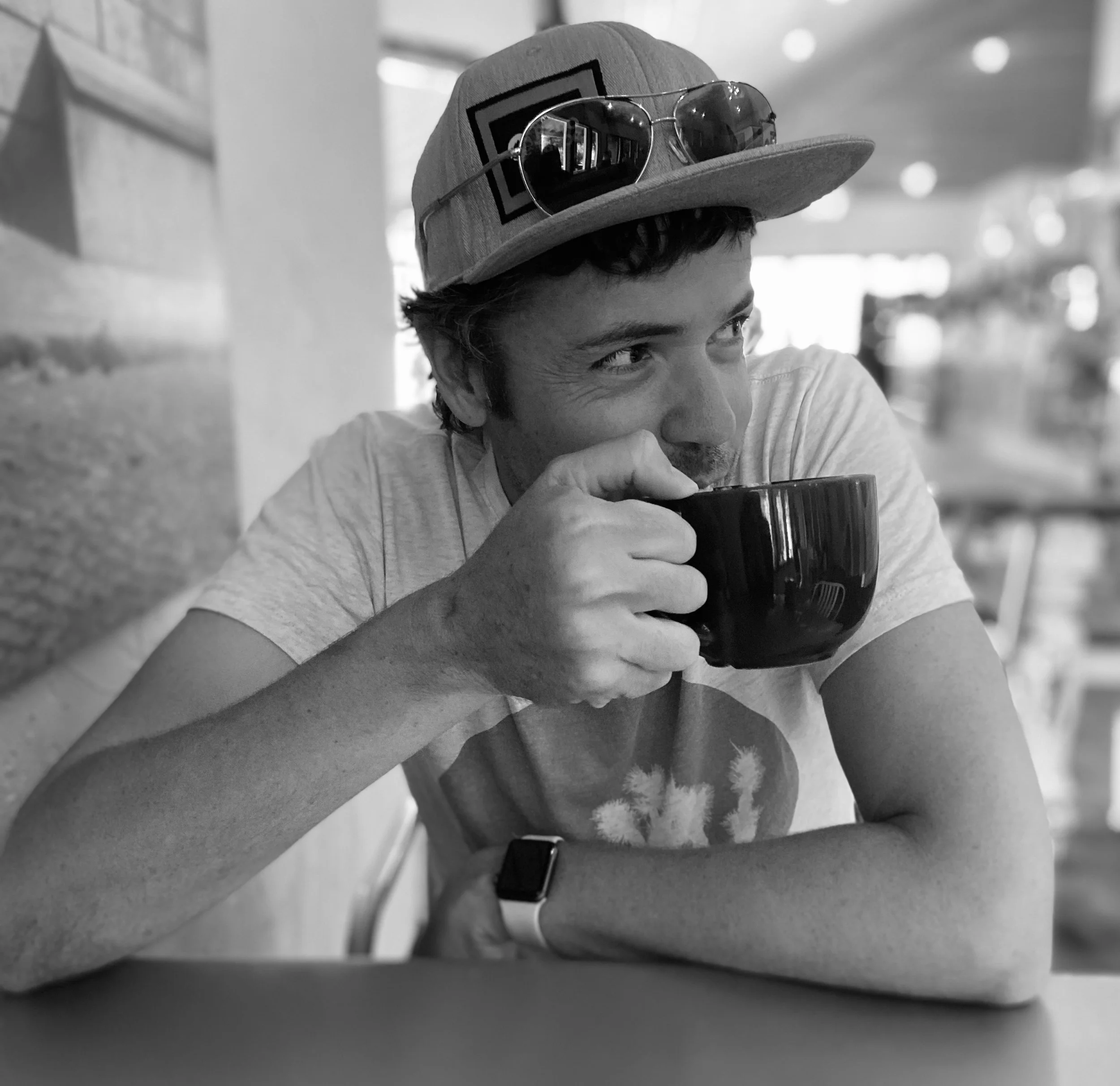
I may not have been a traditional abuser of substances, but alcohol, weed, travel, work, food, porn, and other things were all “drugs” of choice to keep me at arm’s length from myself and others. And it was a product of my childhood and environment.
“But if no one has ever looked at you with loving eyes or broken out in a smile when she sees you; if no one has rushed to help you (but instead said, “Stop crying, or I’ll give you something to cry about”), then you need to discover other ways of taking care of yourself. You are likely to experiment with anything—drugs, alcohol, binge eating, or cutting—that offers some kind of relief.” — Dr. Bessel van der Kolk, The Body Keeps the Score
A number of years ago I was at a wedding. And the groom’s father, who hadn’t seen me in several years since losing a lot of weight, came up to me. I’d seen a lot of friends and family that night who I hadn’t seen in years, and most of them had congratulated me on losing so much weight and getting healthier. I’d grown up in a very unhealthy environment and had never taken my body and weight seriously. You would’ve thought that getting called the Stay Puft Marshmallow Man at 7th grade basketball try-outs would’ve done it, but it wasn’t until my health was suffering that I started taking it seriously. I ended up losing 50 pounds in a year.
That evening at the wedding, however, when the groom’s father came up to me and noticed how much weight I’d lost, he asked, “What, did you get leprosy?” That’s what came to his mind to ask me when he noticed I’d lost so much weight. He chose shame over curiosity.
I believe that this is how many people, and from my experience, how many men often talk to one another when it comes to matters of physical and mental health. And I feel like the sentiment underlies how we think about and talk about addiction and addicts, thereby perpetuating the stigma. We look at the surface, and rather than leading with curiosity, we lead with judgement. We ask what’s wrong with them, and thereby stigmatize them and perpetuate a culture that fears vulnerability and asking for help. They are left with few, if any places to go to.
Where do those with addictions end up? Often, the outcomes are homelessness, prison, or worse. I read a staggering statistic from the National Institute on Drug Abuse that “85% of the prison population has an active substance use disorder or were incarcerated for a crime involving drugs or drug use.” Statistics vary, but it’s generally considered that more than 60% of the homeless population abuse drugs or alcohol. (This is an oversimplification I know, and there’s so much more I could say about homelessness and incarceration in America, but alas, I’m keeping this short.)
To pull a page out of Oprah and Dr. Bruce Perry’s book, rather than asking, “What’s wrong with you?”, we need to ask, “What happened to you?”
“Not all addictions are rooted in abuse or trauma, but I do believe they can all be traced to painful experience. A hurt is at the centre of all addictive behaviors. It is present in the gambler, the Internet addict, the compulsive shopper and the workaholic. The wound may not be as deep and the ache not as excruciating, and it may even be entirely hidden—but it’s there. As we’ll see, the effects of early stress or adverse experiences directly shape both the psychology and the neurobiology of addiction in the brain.” ― Gabor Maté, In the Realm of Hungry Ghosts: Close Encounters with Addiction
In a Substack essay I wrote about addiction and sobriety, I talked a bit about Gabor Maté’s fantastic book, In the Realm of Hungry Ghosts. He defines addiction as “Any behavior that a person craves, finds temporary relief or pleasure in but suffers negative consequences as a result of, and yet has difficulty giving up.” This changes how we think of addiction, because culturally, we often only talk about addiction in relation to the big ones like drugs and alcohol.
This definition, however, turns the mirror back on us. Gabor poses the question, “Why do we despise, ostracize and punish the drug addict, when as a social collective, we share the same blindness and engage in the same rationalizations?”
Because when we start to think of addiction as less of a specific substance and more as any behavior, to self-soothe, that we have trouble giving up, then we have to take a closer look at ourselves. Because the list of things that we’d have trouble giving up starts to grow real quick—social media, iPhone, TV, sugar, coffee, work, love, travel, shopping, fitness, and the list goes on.
One of my favorite psychologists, writers, and thought leaders is Vanessa Bennett, who says, "One person's Jack and Coke is another person's people pleasing." As she continued in this Instagram post, "Addictions all serve the same purpose, regardless of what they are. They are a way to self soothe, to not feel shame or discomfort, a way to hide and numb - they are a coping skill we reach for when we have not developed other healthier ways."
Why are you drinking? demanded the little prince.
"So that I may forget," replied the tippler.
"Forget what?" inquired the little prince, who was already sorry for him.
"Forget that I am ashamed," the tippler confessed, hanging his head.
"Ashamed of what?" insisted the little prince, who wanted to help him.
"Ashamed of drinking!” ― Antoine de Saint-Exupéry, The Little Prince
On both a societal and personal level, I think we see addiction, and more specifically admitting addiction, as this imprisonment. This tracks, since most of the prison population has an active substance abuse or is in prison for something substance-related. And it’s built into the fabric of society, such as the “war on drugs.” Admitting addiction then is like our own scarlet letter.
I know that I myself have used the word “addict” or “binge” to describe my love for something like travel or a TV show. Yet behavior and substance addictions have a similar through line. To pull from Gabor Maté's In the Realm of Hungry Ghosts, “All addictions—whether to drugs or to non-drug behaviors—share the same brain circuits and brain chemicals.” Swiss psychologist Alice Miller, when answering the question of what addiction really is, stated, “It is a sign, a signal, a symptom of distress. It is a language that tells us about a plight that must be understood.”
If that’s what addiction is, then are we not all addicts? And if it’s a byproduct of distress, and not a byproduct of who we are or a substance, then should we not meet it with curiosity and empathy? I believe that admitting our addictions, and admitting it in front of others to witness, isn’t something that imprisons, but rather has the power to set us free. Because when we think of addictions as behaviors that have resulted from stressors and our environment, then I think there’s some needed grace and empathy that we can bring to ourselves and our relationships.
This brings me back to Laura McKowen’s work. I mentioned at the top what she said about addiction being “your thing.” This is one of her 9 essential truths, which also include: This isn’t your fault, it is your responsibility, and it is unfair that this is your thing. I believe there is great power in all of that. Society would have us think that addiction exists because of either the substance, the person abusing the substance, or a combination of the two. And if we just get rid of the substance (war on drugs) and abuser (send them to prison, rehab, or the streets), then addiction will disappear.
But to quote Gabor Maté again, “Drugs, in short, do not make anyone into an addict, any more than food makes a person into a compulsive eater.” The problem isn’t you or me or whatever the thing is. Petty as it is to say this, if you want to blame someone, blame the society and oppressive systems that feed and perpetuate addiction and shame anyone who deviates from their norms of appropriate behavior and vices. Therefore, let’s challenge these systems and call bull shit, while also owning our shit and taking responsibility for it.
To play off the words of Anna Lembke’s Dopamine Nation, the world in a short period of time has transformed to a place of scarcity to a place of abundance, and we’re no more happy. "The world is sensory rich and causal poor", neuroscientist Daniel Freedman is quoted as saying to Lembke. Lembke continues, “We know the donut tastes good in the moment, but we are less aware that eating a donut every day for a month, adds 5 pounds to our waistline.”
To bring it back to a more personal level, there was great power when I was able to trace my pain back to its source, and realize that my abuser was abused themself, and their abuser, was also abused (and so it continued for multiple generations). That doesn’t absolve them nor does it unbind me from the responsibility to own my stuff. But that curiosity turned into empathy which turned into forgiveness which turned into self-compassion which turned into action. It was a weight lifted off my shoulder. And it helped me really see them, see myself, see others, and see the interconnectedness of it all. It is my thing, it is not my fault, it is unfair that it is my thing, it is my responsibility.
“The biggest potential for helping us overcome shame is this: We are “those people.” The truth is…we are the others. Most of us are one paycheck, one divorce, one drug-addicted kid, one mental health illness, one sexual assault, one drinking binge, one night of unprotected sex, or one affair away from being “those people”–the ones we don’t trust, the ones we pity, the ones we don’t let our kids play with, the ones bad things happen to, the ones we don’t want living next door.” ― Brené Brown, I Thought It Was Just Me (But It Isn't)
My two-year recovery journey
My journey of recovery began around the time of my 40th birthday two and a half years ago, when my therapist, suggested that I had codependent tendencies. I about jumped out of my skin. I was mortified. I was so mortified, that while I had been journaling almost every day at the time, it took me weeks to write about it and mention it to anyone else. However, it would eventually set me free.
Why was it that I was so mortified? What was it that I feared? It was shame. I remember a few months afterward, a therapist friend of mine in not so many words asked me what it would feel like in relationship to others to let go of my perfectionism, people pleasing, and codependency, and let myself be seen as an imperfect, messy, unkempt version of myself. I squirmed at the question because deep down I knew I’d never been able to let myself do that. It’s why in part I’d always talked about growth, change, and healing in retrospect and never in present terms. I couldn’t just say, “I’m struggling and need some help.”
Being cut off from our own natural self-compassion is one of the greatest impairments we can suffer. Along with our ability to feel our own pain go our best hopes for healing, dignity and love. What seems nonadapative and self-harming in the present was, at some point in our lives, an adaptation to help us endure what we then had to go through. If people are addicted to self-soothing behaviours, it's only because in their formative years they did not receive the soothing they needed. Such understanding helps delete toxic self-judgment on the past and supports responsibility for the now. Hence the need for compassionate self-inquiry. — Gabor Maté, In the Realm of Hungry Ghosts: Close Encounters with Addiction
What shifted for me then is now in part what underlies my pursuit of a degree in positive psychology. My emotional inheritance, script, and system growing up was one of inadequacy. I was never enough. For most of my life, that inner voice—the inner critic—was the voice and words of that early childhood caregiver who I could never live up to. I talked to myself like they’d talked to me (and like their parent talked to them), especially when I felt like I’d made a mistake, fallen short, or disappointed others. My rapid reaction was always one of criticism.
We often talk about recovery as if it’s recovery from a specific behavior—drinking, drugs, sex, gambling, and so on. It’s not what I had to recover from, it’s who I had to recover. I had to go recover that little kid who for his entire life, especially from men, was told that he wasn’t good enough, wasn’t man enough, wasn’t smart enough, wasn’t athletic enough, wasn’t skilled enough—just wasn’t enough. What I was or wasn’t didn’t matter, at some point, that became my belief system and the way that I saw myself and the way I navigated through the world.
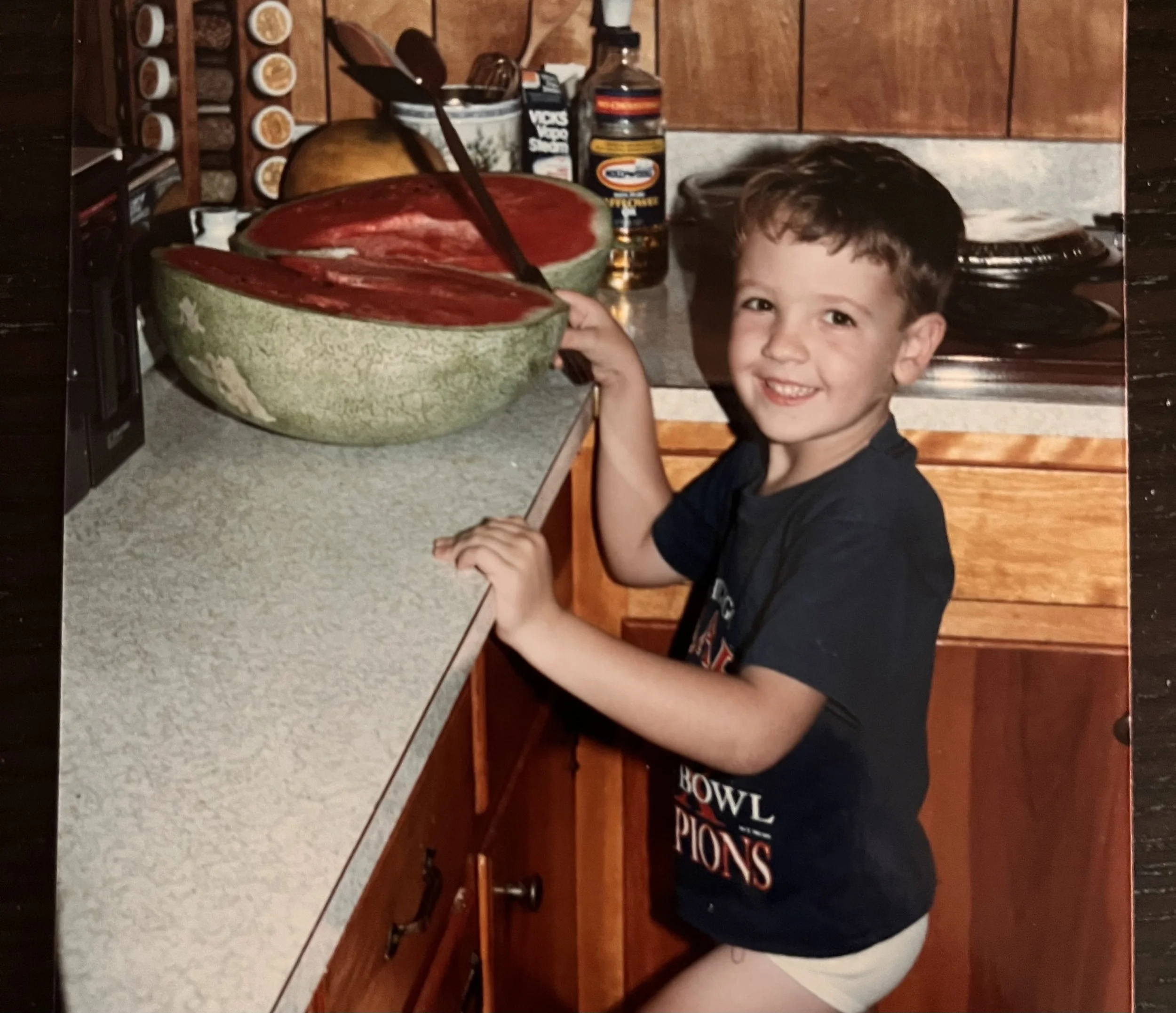
The journey of recovery then was a search and rescue mission. It was to recover that little kid—that young, impressionable version of myself—who’d felt stranded, abandoned, and rejected and who men didn’t model worth and belonging to. I gave him permission to be his most authentic self and let him know that being worthy, enough, valued, and a man isn’t something that he does or has to earn, but it’s something that he is.
“Stop walking through the world looking for confirmation that you don’t belong. You will always find it because you’ve made that your mission. Stop scouring people’s faces for evidence that you’re not enough. You will always find it because you’ve made that your goal. True belonging and self-worth are not goods; we don’t negotiate their value with the world. The truth about who we are lives in our hearts. Our call to courage is to protect our wild heart against constant evaluation, especially our own. No one belongs here more than you.” ― Brené Brown, Braving the Wilderness: The Quest for True Belonging and the Courage to Stand Alone
What was modeled to me early on and continued throughout my childhood and adolescence was that meaning, connection, fulfillment, ____________(insert a host of other words) had to come outside of myself. It in part was a byproduct of the Southern Baptist culture I grew up in, but was also what was modeled to me from caregivers and most people around me. While there wasn’t one thing, like alcohol, that I was addicted to, I gave away my power and parts of myself to so many different things—travel, work, social media, booze, food, codependent relationships, porn, and more.
Yet those different periods of life, coping mechanisms, and ways of existing were no more a mistake though than taking a wrong turn, having to fix a flat tire, or taking a detour on a road trip. It’s information, it’s experience, it’s education, it’s life, it’s being a human. "Embrace your grief," Carl Jung said. "For there, your soul will grow.” Perhaps that’s why it’s called recovery and not recovered. The journey forward continues. And even those moments of grief I see as steps forward and not backward.
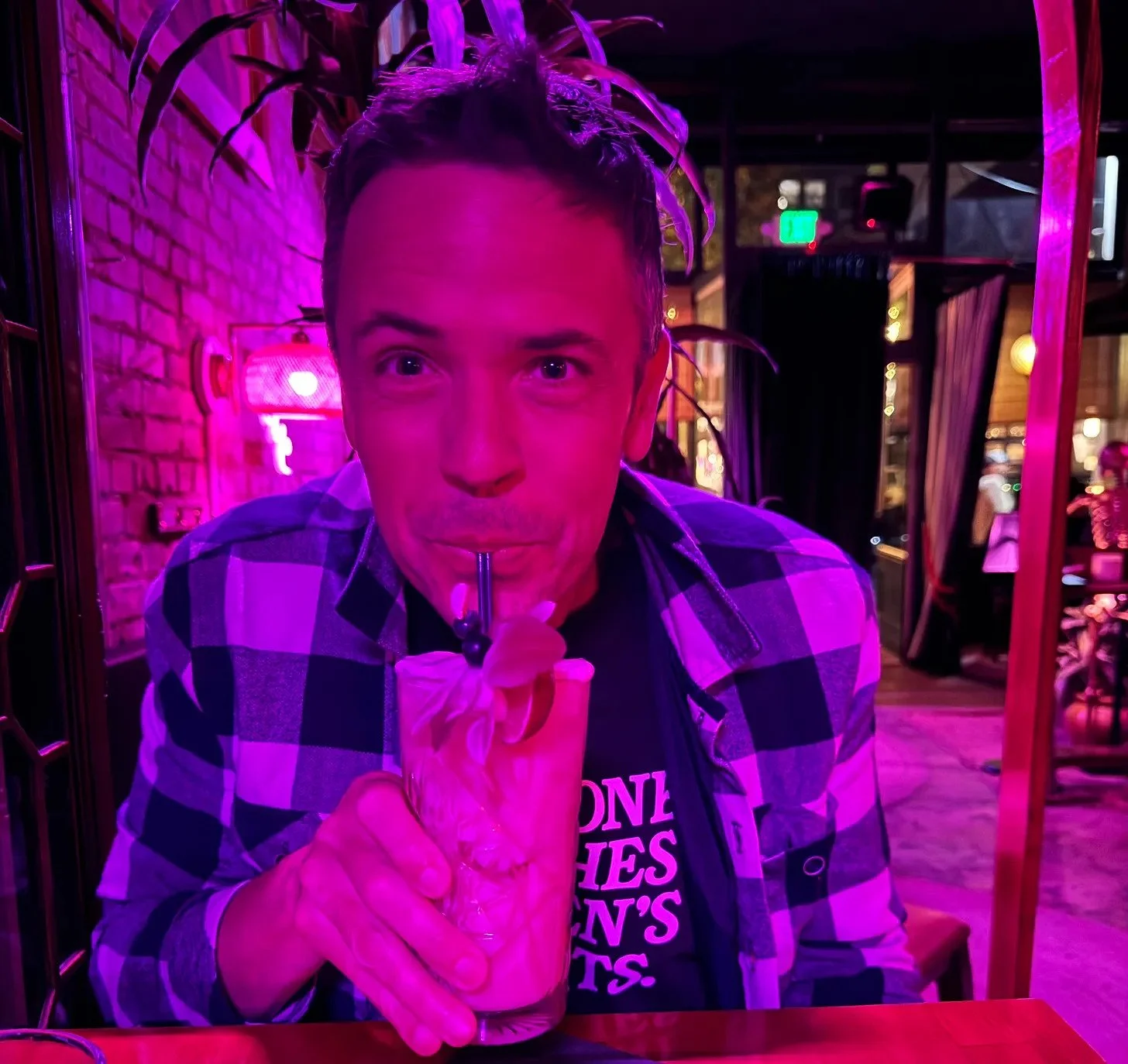
The experience of going to a bar has changed. But what hasn’t changed is that I will still order the most flowery, over-the-top mocktail on the menu
Ultimately, I believe that every time I choose myself, I’m giving those things that are outside of myself less power, I’m giving myself more power, I’m cultivating more connection to myself and others, and I experience more and more liberation. If this is the cost-benefit of recovery, then I choose recovery—at least most of the time, because I’m human after all.
“True belonging is the spiritual practice of believing in and belonging to yourself so deeply that you can share your most authentic self with the world and find sacredness in both being a part of something and standing alone in the wilderness. True belonging doesn’t require you to change who you are; it requires you to be who you are.” ― Brené Brown, Braving the Wilderness: The Quest for True Belonging and the Courage to Stand Alone
I continue to write about this part of my journey because for one, it heals me and continues to empower and liberate me. But I earnestly hope that it collectively serves as a balm. We, and only we, are going to save ourselves. We are the one we have been waiting for, to play off the words of Alice Walker’s book by the same name. And I’m resolved for us to think about addiction, meet our own addictions, and meet others in ways that aren’t so stigmatizing and polarizing. To call on Ram Dass’ words, “We're all just walking each other home.”